
A fireproof document bag is useful when a business needs portable, organized protection for important records, but enterprise buyers should verify material construction, closure method, size, lock requirements, water resistance, and documentation before placing a bulk order. The right supplier decision is not just about finding a bag that says “fireproof”; it is about matching the storage format to the records workflow.
Most fireproof document bag pages are written for home buyers. They focus on passports, wills, cash, and emergency kits. Those uses matter, but a procurement team has a different job. The buyer may need 200 document bags for regional offices, a lockable format for legal departments, branded packaging for employee kits, or a repeatable supplier path for business continuity programs.
That is where the sourcing process needs more discipline. This guide explains how enterprise buyers should evaluate fireproof document bags, compare them with safes and backups, build a sourcing brief, and use sample-first procurement before moving into bulk or custom orders.
> Key Takeaways
> – Fireproof document bags should be evaluated by use case, not only by temperature claims.
> – Enterprise buyers should check capacity, closure, lock, labeling, water resistance, and documentation before bulk orders.
> – A sample-first process helps teams test handling and workflow before scaling.
> – Fireproof bags are portable and useful, but they should not replace safes, offsite storage, or digital backups in every scenario.
> – NWAN supports sample, bulk, and project-based sourcing for document protection products.
Planning a business records protection program? Start with NWAN’s Archival Protection Bags category to review document storage formats before requesting a quote.
What Is a Fireproof Document Bag?
A fireproof document bag is a portable pouch or organizer made with fire-resistant materials, often silicone-coated fiberglass, to help protect documents from brief fire exposure, heat, water exposure, and emergency handling. It is commonly used for contracts, certificates, passports, deeds, financial records, backup drives, and continuity kits.
The word “fireproof” needs careful handling. In search results and product catalogs, buyers will see claims such as 2000F, 4200F, 5200F, waterproof, fireproof, fire-resistant, UL94, SGS, and multi-layer construction.
Those claims are not interchangeable. Some refer to material behavior. Some refer to a product title. Some may apply to a specific test condition rather than every real-world fire scenario.
For procurement teams, the useful question is not “Is this bag fireproof forever?” The better question is: “Does this document storage format fit our risk, workflow, handling, and approval requirements?”
That question keeps the purchase practical. A fireproof document bag may be the right tool for portable document sets, emergency kits, regional office continuity packs, or controlled document handoff. A certified safe, offsite storage, encrypted digital backup, or bank deposit box may still be needed for other parts of the records program.
When Should Businesses Use Fireproof Document Bags?
Fireproof document bags fit best when documents need to stay grouped, portable, and easy to retrieve. The product is especially useful when a team needs more order than a folder, but more mobility than a fixed safe.
Legal and contract custody
A legal department may need to organize original contracts, deeds, board documents, notarial records, or signed agreements. A lockable fireproof document bag can help create a controlled custody format for documents that need to move between an office, storage room, executive suite, or field location.
For example, Elena manages legal operations for a facilities group with eight regional offices. Each office keeps signed lease documents, insurance certificates, and local operating permits.
Before ordering in bulk, she requests two sample formats: one flat fireproof document bag and one lockable organizer bag. Her team discovers that the lockable organizer is easier to audit because the contents stay separated by document type. That finding changes the sourcing brief before the larger order.
The lesson is simple. The right format is the one that supports the legal workflow, not just the one with the strongest product headline.
Finance and accounting records
Finance teams often manage bank documents, tax records, insurance files, payment authorizations, and emergency account information. Ready.gov’s Emergency Financial First Aid Kit emphasizes organizing financial, medical, and household information before a disaster so recovery is faster after the immediate emergency passes.
For enterprise buyers, that means the document bag should support both protection and retrieval. The team should know what goes inside, who owns it, where it is stored, and how often the contents are reviewed.
HR and employee documentation
HR teams may need fireproof document storage for employee emergency contacts, copies of identity documents, benefits paperwork, training records, or deployment files. A bag used by HR should be easy to label and should not force staff to unpack everything to find one document.
In this use case, compartments and indexing can matter as much as material claims. A poorly organized bag can protect a stack of paper while still slowing down the team during an urgent retrieval.
Emergency response and business continuity kits
Ready.gov’s build-a-kit guidance includes important documents such as insurance policies, identification, and bank account records saved electronically or kept in a waterproof portable container. FEMA also recommends safeguarding critical paper and electronic copies in fireproof and waterproof storage, safe deposit boxes, or trusted offsite locations.
This creates a strong use case for fireproof document bags in business continuity planning. They can hold copies, USB drives, site contacts, vendor lists, permits, and insurance records in a format that can be moved quickly.
Distributor, reseller, and employee-kit programs
Some buyers are not the final users. They may be distributors, promotional product providers, safety equipment resellers, or corporate program managers building branded kits. These buyers need to think about packaging, logo placement, minimum order quantity, destination market, carton labeling, and repeat order consistency.
That is where a fireproof protection products supplier needs to support more than a single checkout. The buyer needs a clear path from sample review to bulk quote.
What Enterprise Buyers Should Check Before Sourcing Fireproof Document Bags
Before approving a fireproof document bag bulk order, procurement should define the documents, the handling process, and the internal approval requirements. The checklist below keeps the review grounded.
Document type and volume
Start with the documents. Are you storing contracts, deeds, certificates, passports, financial records, HR files, USB drives, keys, or mixed emergency documents? The answer affects size, layout, closure, labeling, and whether a lock is useful.
Ask:
- What document sizes must fit without folding?
- How thick is the expected document stack?
- Will each site use the same document set?
- Are original records, copies, or both being stored?
- Will electronic media also go inside?
If the bag does not fit the records cleanly, the team will work around the product. That usually leads to overstuffing, unlabeled bundles, or inconsistent storage by site.
Bag size and internal layout
Fireproof document bags may be flat envelopes, expandable pouches, organizer cases, or box-style bags. A flat bag may work for simple document sets. A multi-section organizer is better when different document classes must remain separated.
For business use, review:
- Internal pockets and compartments.
- Whether letter-size or A4 documents fit.
- Whether the opening is wide enough for quick packing.
- Whether staff can retrieve one document without disturbing the entire set.
- Whether the bag can be labeled externally.
The best choice is not always the largest bag. It is the format that staff will use correctly.
Lock, zipper, flap, and closure method
A fireproof document bag with lock can be useful when documents need basic access control or when the bag may be moved between teams. However, a combination lock on a document bag is not the same thing as a burglary safe.
Buyers should review the closure honestly:
- Does the zipper close cleanly when the bag is full?
- Does the flap cover the zipper or seam area?
- Is the lock easy enough for authorized staff to use?
- Does the team need a lock, tamper evidence, or just document grouping?
- Who controls the combination or access process?
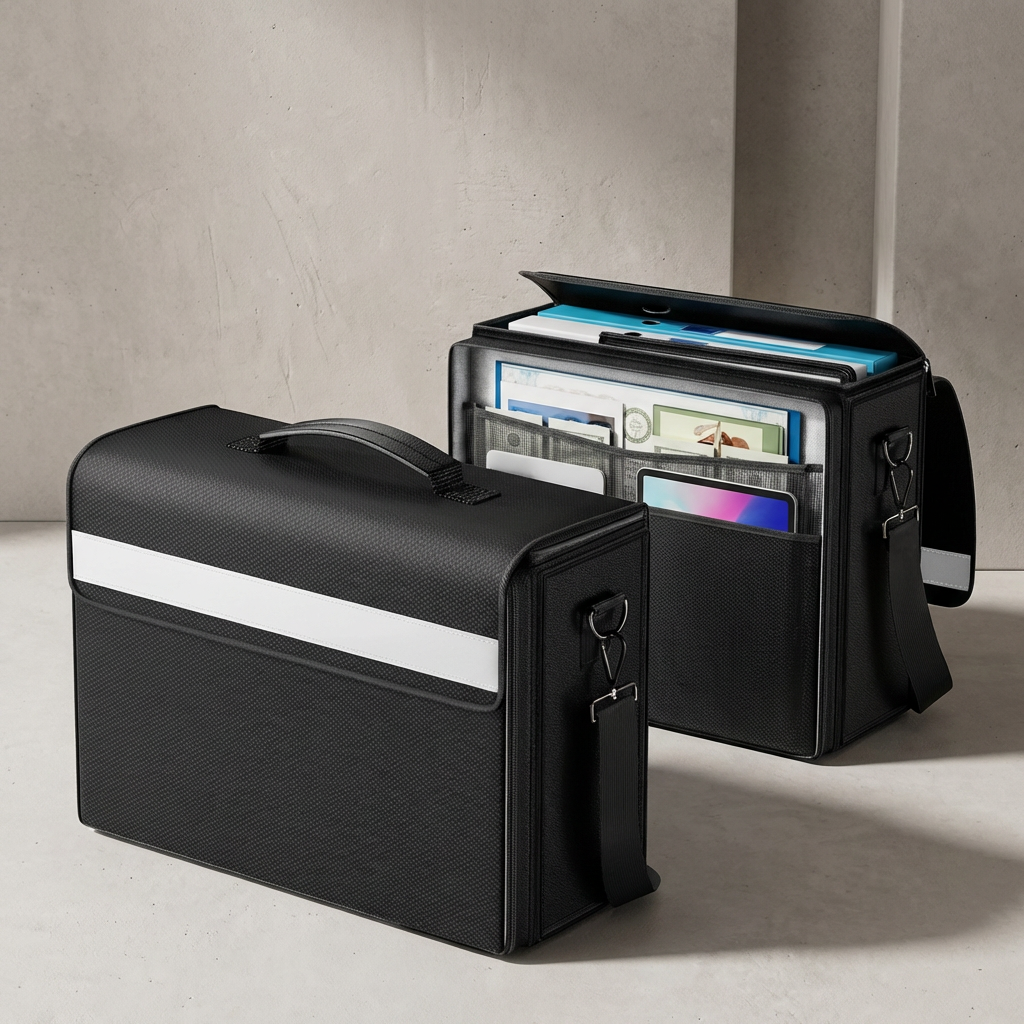
For legal, finance, and executive document custody, NWAN’s Fireproof Document Storage Bag with Combination Lock is the type of format buyers should evaluate when security and organization both matter.
Need a lockable format for legal or finance teams? Review the lockable product first, then contact NWAN with quantity, packaging, and documentation requirements for bulk sourcing.
Water resistance and handling conditions
Fire incidents often involve water exposure from sprinklers, hoses, flooding, or emergency response. That is why water resistance matters in the document storage conversation.
Buyers should ask what kind of water exposure the product is intended to handle. Splash resistance, short exposure, and submersion are different conditions. Do not treat them as the same claim unless the supplier documentation supports it.
Handling conditions matter too. A bag used in an office cabinet has different wear demands than one placed in an emergency kit, field vehicle, or warehouse control room.
Labeling and retrieval workflow
A document bag is only useful if the right person can find the right contents later. Procurement should define the retrieval workflow before buying.
A simple workflow can include:
- External label or tag.
- Department or site owner.
- Document class.
- Date packed.
- Review date.
- Authorized contact.
- Storage location.
Marcus, a regional operations manager, learned this after a storm damaged one of his company’s offices. The team had bought fireproof document bags the year before, but every site labeled them differently.
One location used department names. Another used employee names. A third used no labels at all. The bags were physically present, but retrieval still took hours.
After the incident, the company kept the same bags but standardized labeling across every site.
The product did not fail. The workflow did.
Product documentation and claim scope
Enterprise buyers should request product specifications and available documentation before approving a large order. The goal is not to collect every certificate a supplier has. The goal is to confirm which claim applies to which product and whether the documentation matches the internal approval process.
Ask:
- What material is used in the outer layer?
- What is the lining material?
- What closure method is used?
- What size and weight are available?
- What test references or documentation are available?
- Does any certification apply to the exact product or only to a material?
This is especially important for terms such as UL94V0, fireproof, waterproof, SGS, and extreme heat. Use documentation as a verification tool, not as decorative copy.
Sample review before bulk approval
Sample-first procurement reduces avoidable mistakes. Before placing a fireproof document bag bulk order, buyers should physically test the format against the real document set.
During sample review, check:
- Document fit.
- Closure under realistic load.
- Lock usability.
- Label placement.
- Handle or strap comfort.
- Internal organization.
- Packaging condition.
- Whether the product fits the storage location.
If a buyer cannot validate these points with one or two samples, the risk gets larger at 200 units.
Fireproof Document Bag vs Safe vs Offsite Backup
Fireproof document bags, safes, and backups solve different problems. The best enterprise records plan may use more than one.
| Option | Best for | Strength | Limitation |
|—|—|—|—|
| Fireproof document bag | Portable records, emergency kits, regional document sets | Easy to move, label, and distribute | Limited protection compared with certified safes |
| Lockable document bag | Controlled document custody, office use, legal or finance records | Adds basic access control and organization | Not a burglary safe |
| Fireproof safe or box | Higher fire-resistance needs and fixed storage | More robust physical protection | Heavy, less portable, may limit evacuation use |
| Offsite storage | Original records and redundancy | Reduces single-location risk | Requires access control and maintenance |
| Digital backup | Recovery and distributed access | Useful after loss or evacuation | Requires encryption, access rules, and updates |
FEMA’s document protection guidance recommends considering multiple storage options, including fireproof and waterproof storage at home, safe deposit boxes, trusted offsite storage, and protected electronic copies. For a business, that translates into layered planning.
A fireproof document bag can be the portable layer. A safe or offsite archive can be the fixed layer. A digital backup can be the recovery layer. Procurement should decide which layer the bag is meant to support.
How to Build a Fireproof Document Bag Sourcing Brief
A good supplier conversation starts with a short sourcing brief. This prevents the buyer and supplier from discussing a generic bag when the project needs a specific workflow.
Include these points:
1. Intended use: Legal documents, finance records, HR files, emergency kits, reseller inventory, or corporate gifts.
2. Document type and size: Letter, A4, certificates, passports, folders, USB drives, cards, or mixed contents.
3. Quantity: Sample count, pilot order, and expected bulk quantity.
4. Format: Flat pouch, organizer, lockable case, box-style bag, Faraday bag, or custom format.
5. Closure: Zipper, flap, Velcro, combination lock, or other requirement.
6. Branding: Logo, label, packaging, private label, or no branding.
7. Documentation: Product specs, material information, test references, or compliance review needs.
8. Destination market: Country, packaging language, carton labeling, and shipping assumptions.
9. Reorder expectations: One-time campaign, annual replenishment, or repeat procurement program.
This brief does not need to be long. It needs to be specific enough for the supplier to recommend the right product instead of quoting the easiest SKU.
Common Mistakes to Avoid When Buying Fireproof Document Bags
The common mistakes are usually procedural, not technical.
Buying only by temperature claims
Temperature claims are easy to compare, but they do not tell the whole story. Material, seams, closure, duration, contents, and test context all matter. A higher number in a product title does not automatically make the bag the better business choice.
Ignoring internal organization
A document bag that protects paper but makes retrieval difficult is only solving half the problem. Enterprise buyers should care about labels, compartments, indexing, and ownership.
Treating a bag as a complete safe replacement
A fireproof document bag can support portability and emergency access. It should not automatically replace a safe, vault, offsite archive, or digital backup. The right structure depends on the risk and the document value.
Ordering in bulk without sample review
Bulk orders magnify small problems. A zipper that feels tight on one sample becomes a user complaint across 500 kits. A bag that cannot fit the intended folders creates repacking work at every site.
Forgetting digital and offsite backups
Paper protection is one layer. Ready.gov and FEMA both emphasize organizing important information and protecting copies. Businesses should also think about encrypted digital copies, controlled cloud access, and offsite storage where appropriate.
Why Sample-First Procurement Matters
NWAN fireproof document bag product handling video for sample-first buyer review.
Sample-first procurement gives buyers a practical way to test assumptions before committing to volume. It is especially useful for document protection products because the product interacts with a real workflow.
A procurement manager can review photos and specifications, but they still need to know whether staff can pack the bag quickly, close it without strain, label it clearly, and store it in the assigned location.
Sophia, a distributor buyer, planned to source branded fireproof document bags for a corporate emergency kit program. Her first supplier quote looked attractive, but the sample arrived with packaging that did not fit her client’s kit box.
The bag itself was acceptable. The pack-out was not. By catching the issue at sample stage, she avoided a full shipment that would have required repacking and relabeling.
That is the value of sampling. It moves problems into the review stage instead of the rollout stage.
For NWAN buyers, sample-first procurement can support:
- Product fit review.
- Packaging checks.
- Branding discussions.
- Documentation review.
- Internal stakeholder approval.
- Bulk quote accuracy.
Product Image References
Use these product formats when comparing fireproof document bag options for enterprise sourcing.
Fireproof Document Storage Bag with Combination Lock
4200F Extreme Heat Fireproof Document Bag
Fireproof Document Protection Bag
UL94V0 Fireproof Faraday Signal Shielding Bag
NWAN Fireproof Document Protection Options
NWAN’s document protection range gives buyers multiple formats to evaluate depending on the use case.
Fireproof Document Storage Bag with Combination Lock
The Fireproof Document Storage Bag with Combination Lock is suited for buyers who need a lockable, organized, higher-capacity format for legal, finance, executive, or records custody use cases.
Use it when access control and internal organization are part of the sourcing brief.
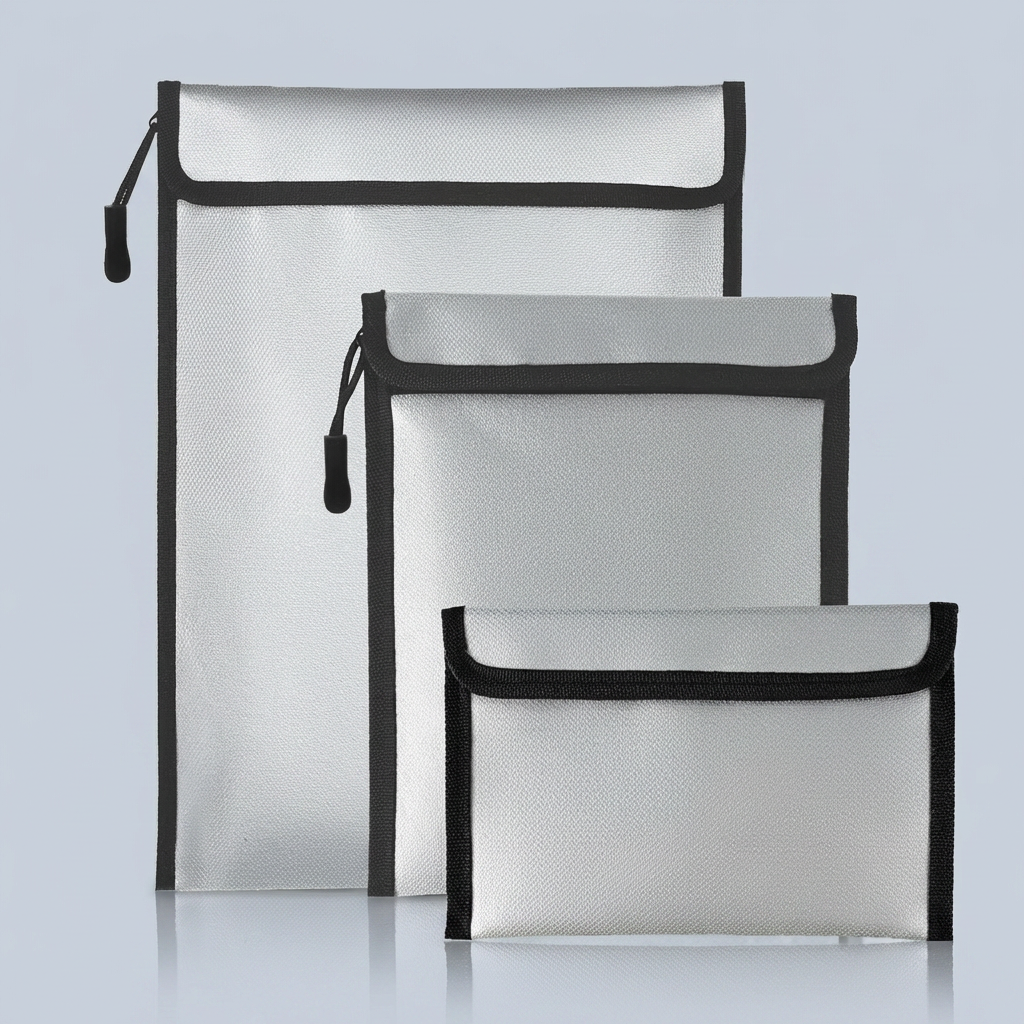
4200F Extreme Heat Fireproof Document Bag
The 4200F Extreme Heat Fireproof Document Bag fits buyers comparing high-heat document bag options for emergency kits, corporate records, and business continuity storage.
Use it when the buyer is evaluating a portable fireproof document bag format with strong fire-protection positioning.
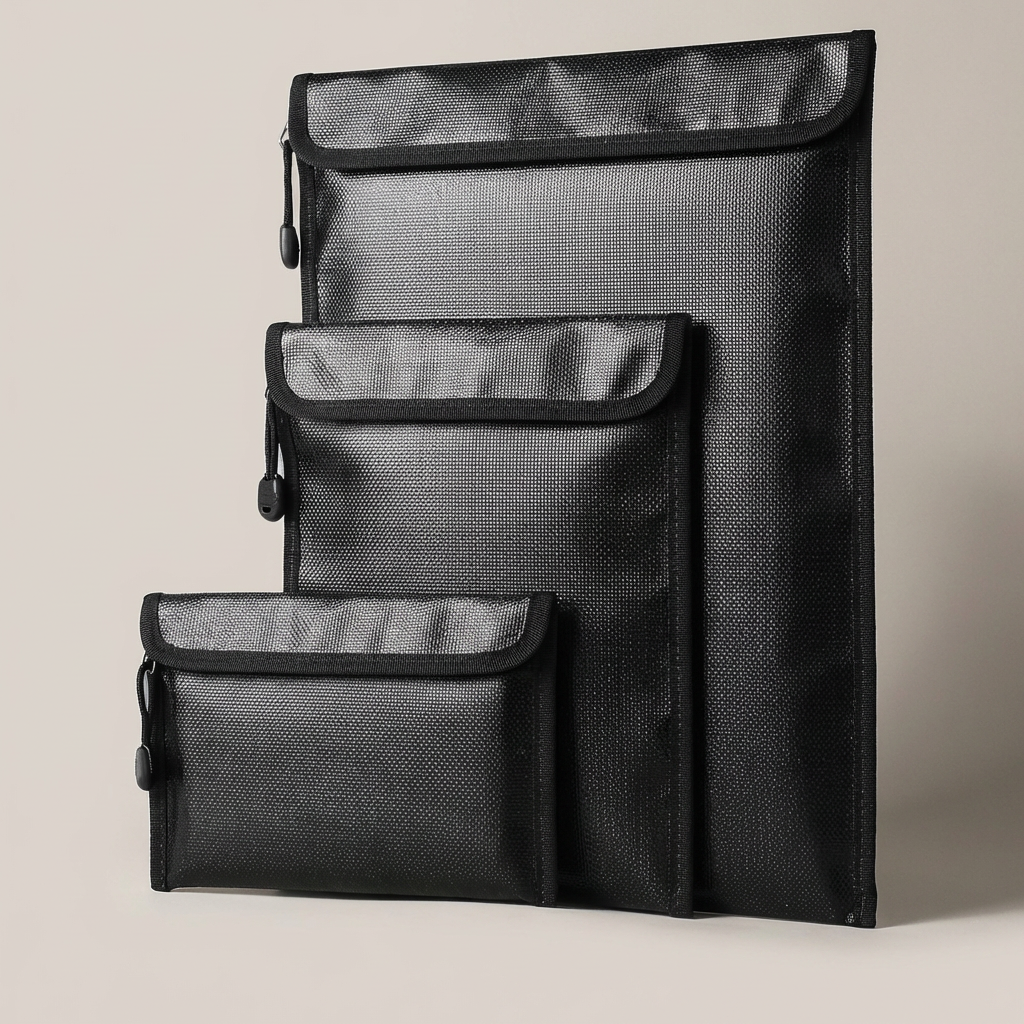
Fireproof Document Protection Bag
The Fireproof Document Protection Bag is a practical option for standard document protection needs, especially when buyers want a portable sample before planning broader deployment.
Use it when the brief calls for straightforward document storage rather than a lockable organizer.
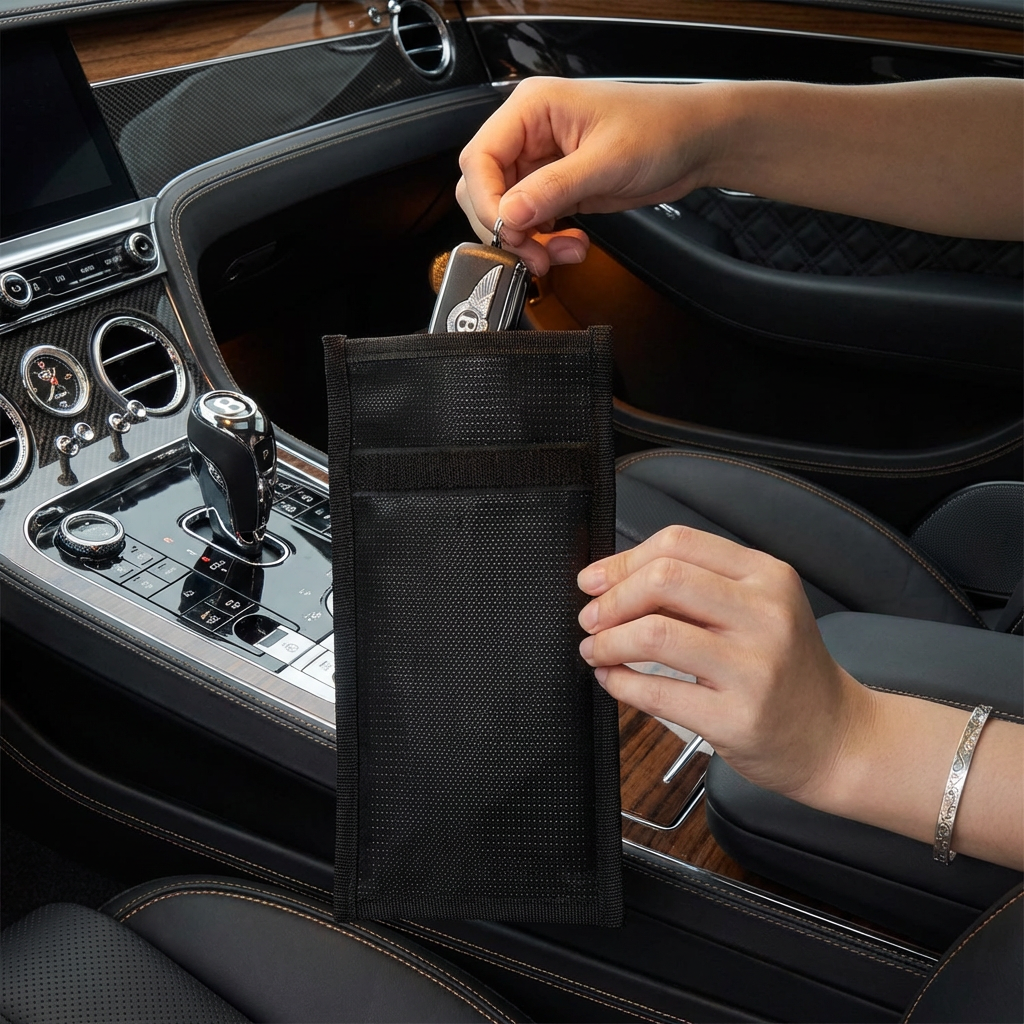
UL94V0 Fireproof Faraday Signal Shielding Bag
The UL94V0 Fireproof Faraday Signal Shielding Bag adds signal-shielding positioning for buyers handling keys, cards, electronics, or sensitive items where fireproof storage and signal control may both matter.
Use it when the buyer needs to evaluate fireproof and Faraday functions in the same product family.
For broader category review, start with NWAN Archival Protection Bags or Fireproof Protection, then move into product samples and quote support.
Ready to compare formats? Send NWAN the document type, quantity, lock requirement, branding needs, and target market so the sourcing conversation starts with the right product path.
FAQ
Are fireproof document bags really fireproof?
Fireproof document bags are better understood as fire-resistant products within a fireproof storage category. They can help protect documents from brief heat, flame, water, and emergency handling conditions, but no soft bag should be treated as guaranteed protection in every fire scenario. Buyers should verify material construction, closure method, documentation, and intended use before relying on any claim.
What documents should a business keep in a fireproof document bag?
A business may keep copies of contracts, deeds, certificates, insurance policies, bank records, permits, HR records, emergency contacts, and continuity documents in a fireproof document bag. Original documents may require additional controls such as safes, offsite storage, or legal custody procedures.
Should buyers choose a lockable fireproof document bag?
Buyers should choose a lockable fireproof document bag when basic access control, transport security, or controlled document custody matters. A lockable bag can help organize and restrict casual access, but it should not be treated as a burglary-rated safe.
Can fireproof document bags be ordered in bulk?
Yes. Fireproof document bags can be sourced for bulk, OEM, private-label, employee-kit, distributor, and enterprise procurement programs. Buyers should order samples first, then confirm quantity, packaging, branding, documentation, and delivery requirements before approving bulk production.
Are fireproof document bags waterproof?
Some fireproof document bags are marketed as waterproof or water-resistant, but buyers should verify what that means for the exact product. Splash resistance, sprinkler exposure, and submersion are different conditions. Ask the supplier what the water-resistance claim covers.
Is a fireproof document bag better than a safe?
A fireproof document bag is better for portability, emergency kits, and distributed document sets. A safe is usually better for fixed storage and higher physical protection. Many businesses use both: a portable bag for grab-and-go records and a safe or offsite location for higher-value originals.
Conclusion
A fireproof document bag is a useful tool for business records protection, but it should be sourced like a procurement item, not a casual accessory. Define the document set, confirm the workflow, verify the claim language, review the closure and layout, and test samples before scaling.
For enterprise buyers, the strongest approach is layered. Use document bags for portable, organized protection. Use safes, offsite storage, and digital backups where the risk or document value requires more redundancy. Then keep the process simple enough for every site or department to follow.
NWAN supports sample-first and project-based sourcing for fireproof document bags, lockable document storage, Faraday bags, and related protection products. Review Archival Protection Bags or contact NWAN for bulk procurement when your team is ready to move from evaluation to sourcing.